September 2026 – A Message from our CEO, Scot Laney
Dear Museum Supporters,
First, to all of you that attended the 2026 Airshow Watch Party, thank you. It is always a privilege to see our supporters enjoying a day at the museum and I hope that you all had a great time.
As you know we have changed our name, we are now the North American Aerospace Museum. Why did we do that? The new name better represents what we are and what we intend to continue being-a major aerospace museum dedicated to telling the story of the aircraft, spacecraft, people and places that make up the rich history of aerospace not only here, but globally. We were born in McMinnville, but our collection is available to anyone interested in the stories we tell regardless of where they live.
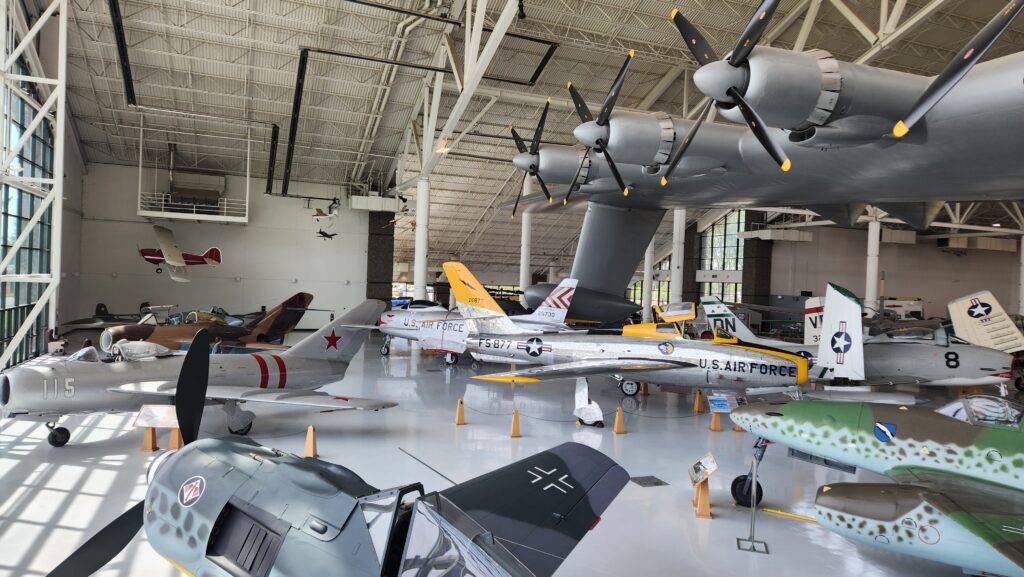
When you think about it your museum is really four museums in one; the Hercules pavilion, the Titan pavilion, the outdoor exhibits and our online presence. We intend to make sure each of these are at their absolute best. Watch for more improvements and new exhibits coming over the next several months and beyond.
I spent some time last week thinking about Artificial Intelligence and AI’s kissing cousin, Augmented Reality, the future of both being almost equal parts “could be great” and “dang, we created new machine overlords and destroyed ourselves”. Too early to tell but I am concerned that the tech world seems to be more often interested in the “can we?” instead of the important “should we?” questions. Thoreau famously wrote in Walden that “men have become tools of their tools” and he was just talking about reversed roles, loss of independence and changing habits being ushered in by the technology of the mid-nineteenth century. By the standards of technology today, the technology he was writing about seems primitive indeed. Yet he had a point.
From my perspective how all of this affects your museum most is the disassociation with facts that AI/AR is happy to provide anyone who happens to ask or simply just innocently spends some time on social media. If you want to convince people that the sky is not blue but instead is a wonky shade of persimmon, you can hire a batch of AI agents for a few bucks, and they will happily get to work.
It you want to distort history AI and AR will belly right up to the bar and help.
There is always a disconnect between the three tenants of history- written history, spoken history and lived history. We struggle with that disconnect on a regular basis here. It is virtually impossible to find consensus between the three and they are often radically different. AI can tailor any historical message anyway a user wants and AR will deliver what seem to be credible arguments made by historical figures that may or may not have ever said what they are programmed to say. But it will seem very credible, putting the “deep” in the “fake” with extreme precision.
We are also in an era where museums are under increasing pressure to only tell certain stories that align with certain points of view. While I agree that there are museums that are treading a dangerous line in trying to story shape, wading into current culture before it is actually history, most of us are just trying to present and preserve the past in as accurate a way as possible, telling the conflicts between the written, spoken and lived versions of each in a balanced way.
I think that is what you should rightly demand of your museum and I believe we are doing that well. I like to think that we have a robust AR presence ourselves but, in this case, it is not Augmented Reality we endeavor to present, it as Actual Reality.
Scot Laney, CEO